
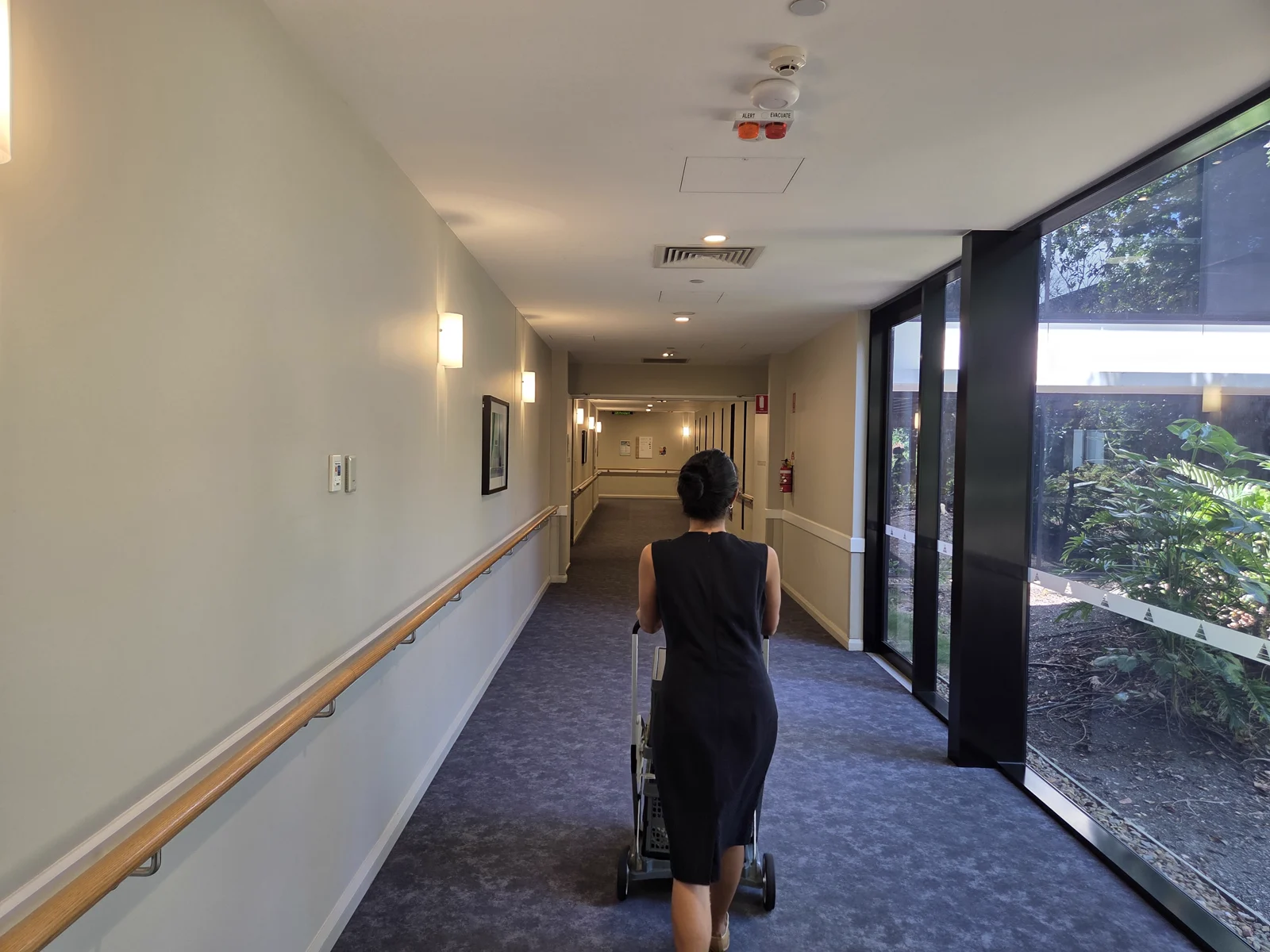
The mobile imaging clinician arrives, brings in the equipment and meets the resident. That is the part of the service everyone can see.
Before that moment, someone has checked the referral, coordinated the visit and worked out what the resident will need. After the equipment leaves, there is still a report to deliver and a clinical decision to make.
Understanding those handoffs helps a facility prepare for the whole visit. It also makes it easier to see who needs to resolve a missing detail, a change in circumstances or a result that has not arrived.
This practical guide draws on Modia COO Ivan Szaks's account of referral checks, resident preparation and post-scan communication. It is a companion to our CEDA-informed article on aged-care growth and diagnostic access. The conference prompted the broader access question. The workflow details here come from Modia's own operational account.
The quick version
- Confirm the clinical request, contact details and payment responsibility before the visit.
- Make sure the resident will be on site and that the facility can coordinate with the agreed visit arrangements.
- Follow the preparation instructions for the examination actually booked.
- Discuss mobility, positioning and staff assistance beforehand.
- Distinguish confirmation that the scan is complete from the radiologist's report and the treating clinician's follow-up.
1. Make the referral usable
A referral starts the process, but the booking team may need more information before the visit can be arranged.
In Ivan's account, two recurring missing details are Medicare card validation information and who is responsible for paying for the scan. Neither should be left for the resident or an unfamiliar staff member to resolve when the clinician arrives.
The practical question is who can supply the missing information. It may be the facility contact, the resident, a carer or the referring practice, depending on the situation. Clarifying that contact early gives the booking team somewhere to direct a query.
Clinical and administrative questions also need to stay distinct. The referring clinician identifies the examination and clinical question. Payment information helps arrange the service, but it does not determine whether the examination is clinically appropriate.
For a facility, a useful first check is simple: can the booking team identify the resident, understand the request and reach the right person if something needs clarification? Use the provider's current requirements for the exact information to send.
2. Coordinate with the person who knows the resident
Modia contacts the facility to coordinate scheduling. The facility then needs to make sure the resident is actually there and available for the visit.
That can sound obvious until another appointment, a changed routine or a shift handover intervenes. A booking in the calendar needs to be known to the people preparing the resident and assisting the visiting clinician.
The most useful contact is someone who can connect the appointment with the resident's circumstances. If the person coordinating the booking will not be on duty, the incoming team needs the relevant details.
That handover should cover the agreed visit arrangements, any examination preparation and the assistance already discussed with the imaging team. If circumstances change, contact the provider so the plan can be reassessed.
3. Prepare for the examination that was requested
Ultrasound preparation varies with the examination. Ivan identified fasting for some abdominal examinations and bladder preparation for some renal examinations as examples of arrangements facilities need to coordinate.
The instruction to follow is the one supplied for the resident's actual booking. A general blog cannot tell an individual resident how long to fast, how much to drink or whether their circumstances require an adjustment.
If the resident cannot follow the instructions, ask the imaging team before the visit. Do not improvise fasting, fluid or medication changes from a general checklist.
Practical readiness also includes knowing where the resident will be and who will support them. Explain the planned visit in a way the resident can understand and raise communication or support needs with the clinical team. Being prepared should help the resident take part in the encounter.
4. Plan positioning before the equipment arrives
A person's usual mobility arrangements matter to an imaging visit. The position needed for an examination may be different from the position in which they are most comfortable day to day.
Ivan's account highlights that some X-rays require particular positioning and that a resident with very limited mobility may need staff assistance. A hoist or Sara Stedy may form part of an existing transfer plan. The correct equipment and assistance depend on the resident and the examination.
A Sara Stedy is a non-powered sit-to-stand aid, not a substitute for every type of hoist or transfer. Mentioning the equipment a resident uses helps start the planning conversation. It does not establish that the equipment or transfer is appropriate for the scan.
The facility and imaging clinician need to agree how the visit can proceed within the resident's assessed handling needs and staff competence. Discuss limitations before attendance. If safe positioning cannot be achieved, the clinical team needs to consider the next appropriate option.
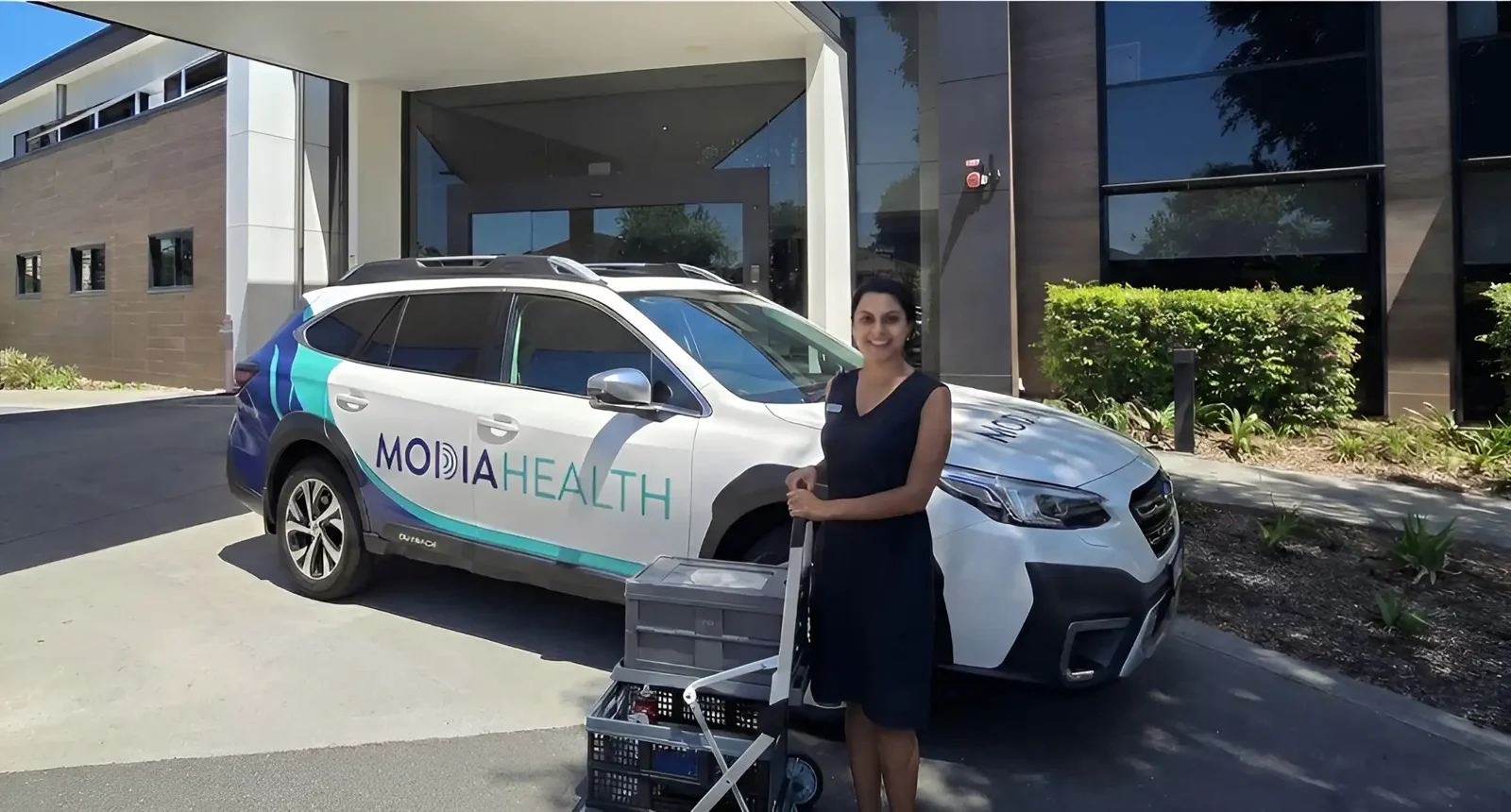
5. Keep the scan, images and report distinct
After imaging, Modia contacts the facility to confirm that the scan has been completed, according to Ivan's operational account.
That confirmation answers one question: has the examination taken place? It does not mean the radiologist's report has been issued or that the treating clinician has reviewed it.
There are three separate points to follow:
- Examination completed: the imaging visit has taken place.
- Report available: the examination has been interpreted and the report is available to its intended recipient.
- Clinical follow-up: the responsible clinician considers the result in the context of the resident's condition and decides what happens next.
The facility should know the expected report arrangements for that booking and whom to contact if a result is missing. Turnaround requirements and any time-sensitive communication need to be agreed for the particular referral. A routine timeframe should never be used as a reason to wait when the resident's condition is changing.
The treating clinician retains responsibility for clinical interpretation in context, treatment and follow-up decisions. Confirming that information has been sent is one handoff. Making sure the appropriate person can act on it is the next.
Why the handoffs deserve attention
This wider view of an imaging visit also appears in Australian research. A qualitative study by Chandra Makanjee and colleagues, published in BMC Nursing, interviewed 13 nurses from five residential aged-care facilities and one hospital site offering mobile X-ray. The researchers examined the journey from an imaging request to follow-up, including referral decisions, communication and coordination. Read the study
It is a small study of nurses' experiences. It does not measure Modia's performance or prove that a particular workflow prevents hospital admission. Its relevance here is practical: the work surrounding imaging is part of the service experience and deserves explicit attention.
A short checklist for the facility contact
Before the visit, confirm:
- The booking team has the referral information it has requested, including any outstanding Medicare details and payment responsibility.
- The resident will be on site and the staff on duty know about the visit.
- The preparation instructions for the booked examination are understood, or any difficulty has been discussed.
- Mobility, positioning and any required staff assistance have been raised with the imaging team.
- The intended report recipient and contact route for a missing result are clear.
From where Modia sits
The facility brings knowledge of the resident and their environment. The imaging clinician brings the skills and equipment for the examination. The referrer brings the clinical question and owns the decisions that follow.
Our coordination work is about helping those contributions meet at the right time. Getting a missing administrative detail resolved, confirming the resident is present or discussing positioning before arrival can each determine what needs to happen next.
If you are arranging a visit, contact Modia with your referral and practical service questions. For broader context, read what Queensland's growing aged-care population means for diagnostic access.
Common questions
Does every ultrasound require fasting?
No. Preparation depends on the examination. Follow the instructions supplied for the booked scan and contact the imaging team if the resident cannot follow them.
Does the facility need staff available to assist?
That depends on the resident's support and positioning needs. Discuss those needs beforehand so assistance can be arranged where required.
Is scan-completion confirmation the same as receiving the result?
No. Completion of the examination, availability of the report and the treating clinician's follow-up are separate steps.
General preparation information, not individual medical or manual-handling advice. Follow examination-specific instructions, the resident's assessed handling plan and the treating team's escalation pathway. Public research checked on 5 September 2026.


