
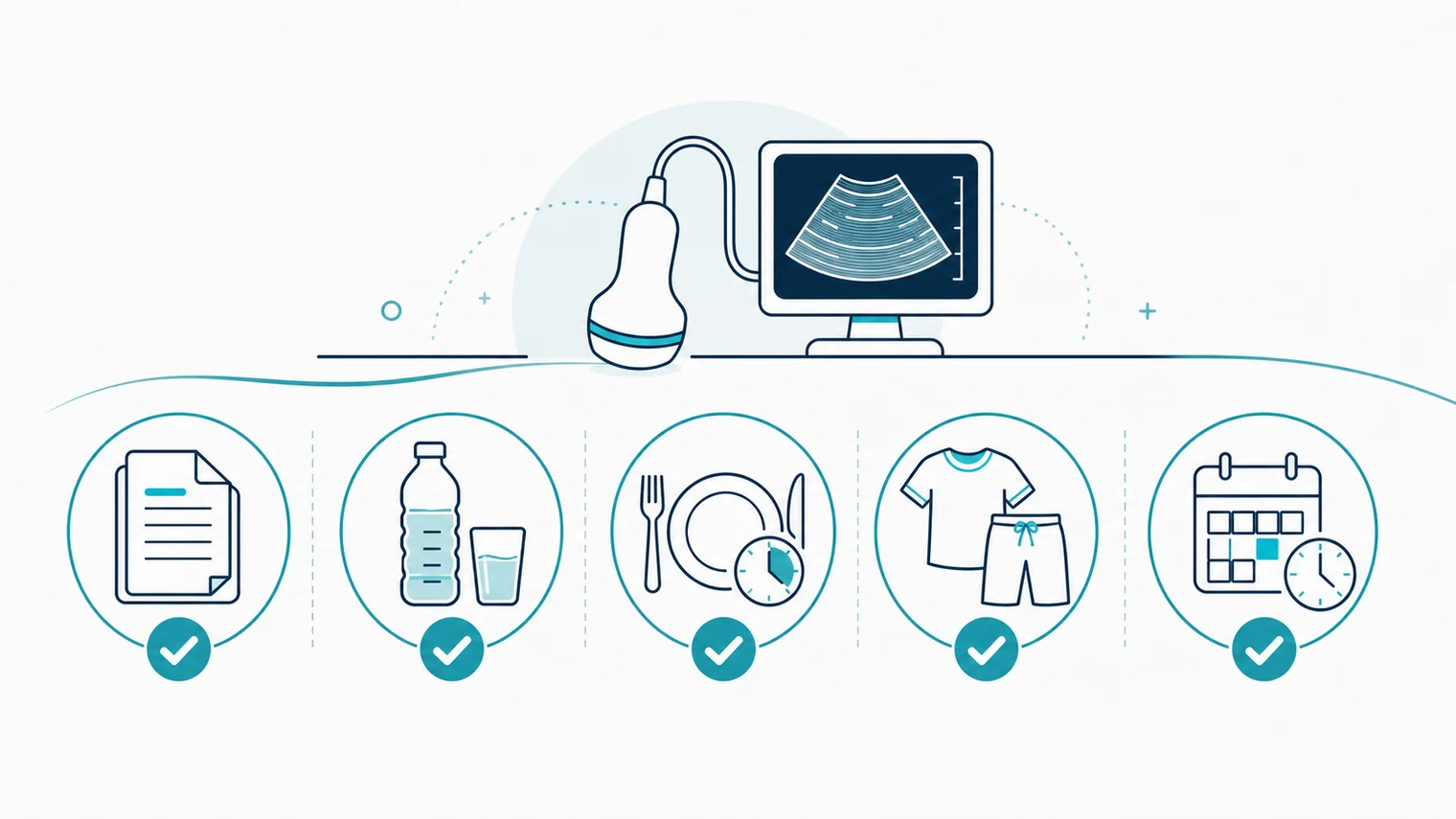
Ultrasound scans are non-invasive, free of radiation, and widely used to diagnose a range of conditions. Getting the preparation right plays a big part in producing clear images and accurate results.
Important
Skipping preparation can lead to unclear results and the need for repeat scans. This guide walks you through what you need to know about ultrasound preparation so you can avoid unnecessary delays and get the most accurate diagnosis possible.
Skip the hassle - Book your mobile ultrasound today and get clear pricing upfront.
Need the exact instructions for your scan? See our patient preparation guide for fasting windows, water intake and what to bring, by scan type.
Why Ultrasound Preparation Matters
Following the right pre-scan instructions gives you:
- Clearer images, which means better diagnostic accuracy
- Fewer repeat scans, which saves time, money, and stress
- More reliable results, so doctors can make informed treatment decisions
Different ultrasounds call for different preparation methods, so let's walk through them.
How to Prepare for Different Types of Ultrasounds
1⃣ Abdominal Ultrasound Preparation
Preparation type: Fasting (4-6 hours before the scan)
Why?:
- Fasting reduces gas in the stomach and intestines
- Improves visibility of the liver, gallbladder, spleen, pancreas, and kidneys
Tip: Skip fatty foods the night before, since they slow digestion down.
2⃣ Pelvic Ultrasound Preparation
Preparation type: Full bladder (drink water 1 hour before, don't urinate)
Why?:
- A full bladder acts as an acoustic window, pushing bowel gas out of the way for a clearer view
- Improves the picture of the uterus, ovaries, prostate, and bladder
Tip: If you accidentally empty your bladder, drink at least 500ml of water and wait 30 minutes before your scan.
3⃣ Obstetric Ultrasound Preparation
Preparation type: Full bladder (early pregnancy)
Why?:
- In early pregnancy, a full bladder lifts the uterus, which improves fetal imaging
- Later pregnancy scans don't usually need preparation
Additional tip: Some providers suggest a light meal before the scan to encourage fetal movement.
4⃣ Renal Ultrasound Preparation
Preparation type: Hydration and possible fasting
Why?:
- Hydration fills the bladder, which improves kidney imaging
- Fasting cuts down on gas, especially when looking at nearby organs like the pancreas
5⃣ Transvaginal Ultrasound Preparation
Preparation type: Empty bladder
Why?:
- Unlike a pelvic ultrasound, an empty bladder gives the probe better access for clearer imaging of the uterus and ovaries
Tip: Wear comfortable, loose clothing for ease during the procedure.
6⃣ Musculoskeletal Ultrasound Preparation
Preparation type: No special preparation needed
Why?:
- These scans focus on muscles, joints, tendons, and ligaments, so food or bladder contents don't affect the results
7⃣ Pregnancy Ultrasound Preparation
Preparation type: Varies by stage of pregnancy
Why?:
- Early pregnancy: full bladder needed for better fetal visualisation
- Second and third trimester: no prep required, but wear two-piece clothing for easier access
- Fetal movement scans: a small meal before the scan may encourage baby movement, which helps visibility
Tip: Skip caffeinated drinks beforehand, since they can overstimulate fetal movement and make imaging harder.
Common Questions About Ultrasound Preparation
Are ultrasounds painful?
Generally no. Ultrasounds are non-invasive and painless, though some slight discomfort may come from:
- Transducer pressure on the abdomen
- A full bladder (for pelvic or obstetric scans)
- Pre-scan fasting
If you feel discomfort, tell the technician straight away.
What should I wear to my ultrasound appointment?
Wear loose, comfortable clothing.
You may need to change into a gown depending on the area being scanned. Two-piece outfits work best for abdominal and pelvic ultrasounds, so you can easily lift your shirt while keeping your lower body covered.
How long does an ultrasound take?
Most ultrasound exams take between 30 and 60 minutes.
The exact length depends on the type of scan and whether extra imaging is needed.
When will I get my ultrasound results?
Your doctor will usually get the results within 24 to 48 hours.
A radiologist reviews the images and sends a report to your referring physician, who will then talk through the findings with you.
What happens if I don't follow the preparation instructions?
Skipping preparation can lead to unclear images.
That may mean inconclusive results and a repeat scan, which delays diagnosis and treatment. Always check with your healthcare provider about the right preparation steps.
Why Fasting Matters for Abdominal Ultrasounds
Fasting before an ultrasound improves image clarity by:
- Reducing gas that can block the view
- Emptying the stomach, which gives better visibility of surrounding organs
- Keeping exam conditions consistent for more accurate results
Learn more about our full range of ultrasound services.
Modia Health Brings Quality Care to Your Doorstep
At Modia Health, we make diagnostic imaging easy and stress-free by bringing ultrasound services directly to you.
Why choose us?
- Medicare benefit handled for eligible ultrasounds
- Mobile services so you can get scanned at home or in aged care
- Experienced clinicians who deliver accurate imaging
- Short wait times and fast results
Don't let location or mobility issues hold up your healthcare.
Book your mobile ultrasound today
For home visits:
Book home ultrasound - Convenient in-home service
For aged care facilities:
Book facility visit - Metro South area
Related Healthcare Resources
Learn more about our services:
- Complete Ultrasound Guide - Full range of diagnostic imaging
- Mobile X-Ray Services - Additional imaging options
- IV Therapy at Home - Full mobile healthcare
Emergency Situations
Get medical help straight away if you experience:
- Severe pain or discomfort
- Acute symptoms that need urgent care
- Pregnancy-related emergencies
For urgent cases: Contact your GP straight away or call 000 for emergency services.
Disclaimer: This information is for educational purposes only and shouldn't replace professional medical advice. Always talk with qualified healthcare providers for proper diagnosis and treatment recommendations.


