
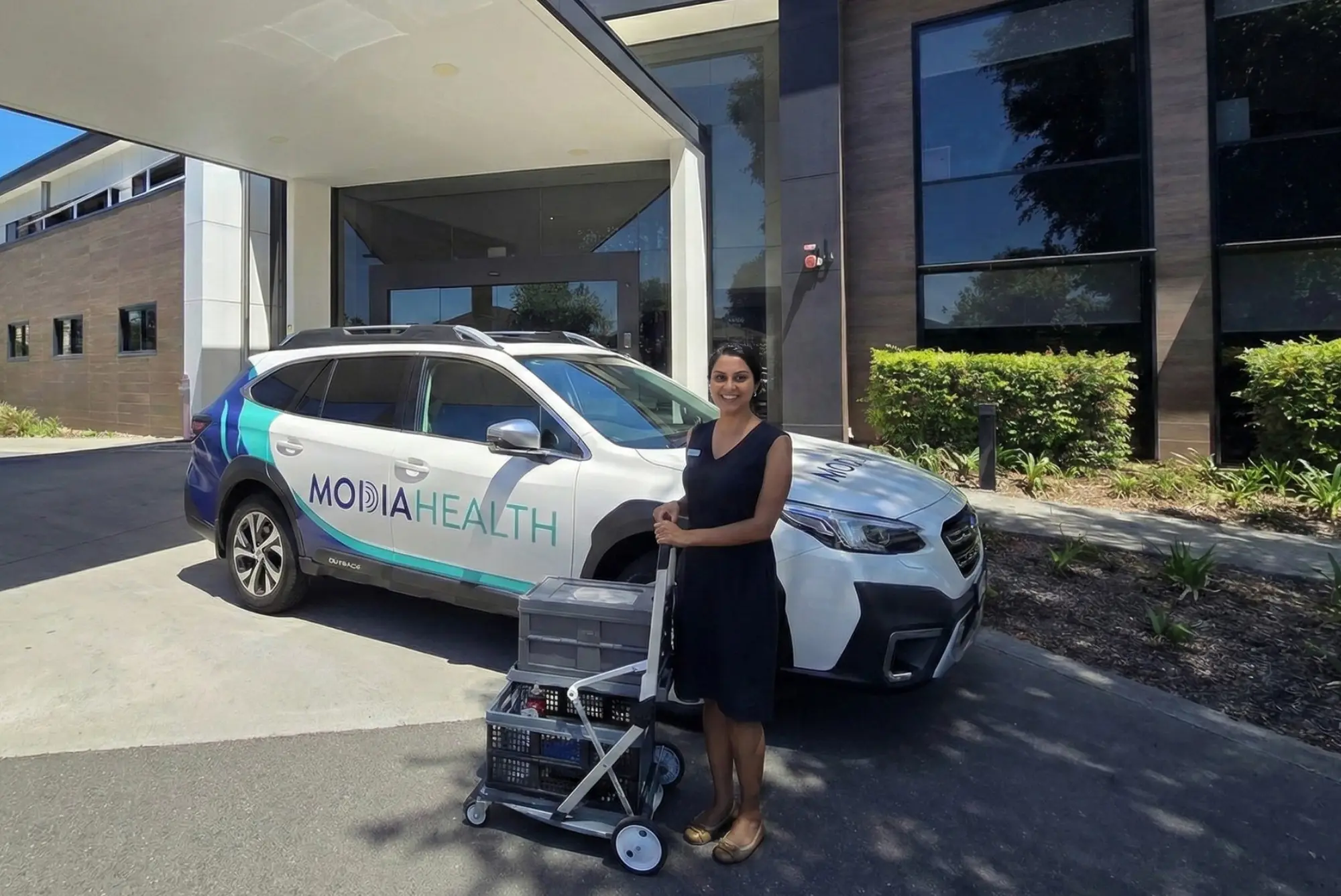
When a resident can't move his arm and is in severe pain, every hour counts. Here's how one aged care team turned what could have been a 24-hour hospital ordeal into same-day answers, without the resident ever leaving his room.
The Call That Changed Everything
It was 11 o'clock on a Tuesday morning when the phone rang.
A nurse at a local RACF was on the line. She had a resident in pain, with significant bruising on his right arm, limited mobility, and real concern about what was happening beneath the surface. She needed an ultrasound, and she needed it urgently.
Here's what happened next.
Our ultrasound technician was already in the area. We checked the schedule. Yes, we could make it work today.
"Send through the referral," we told her.
She did. She also contacted CAREPACT, so the costs were covered, meaning no billing stress, no payment delays, and no awkward conversations with family about unexpected expenses.
Within one hour of that phone call, our technician walked through the doors of the facility.
What the Scan Revealed
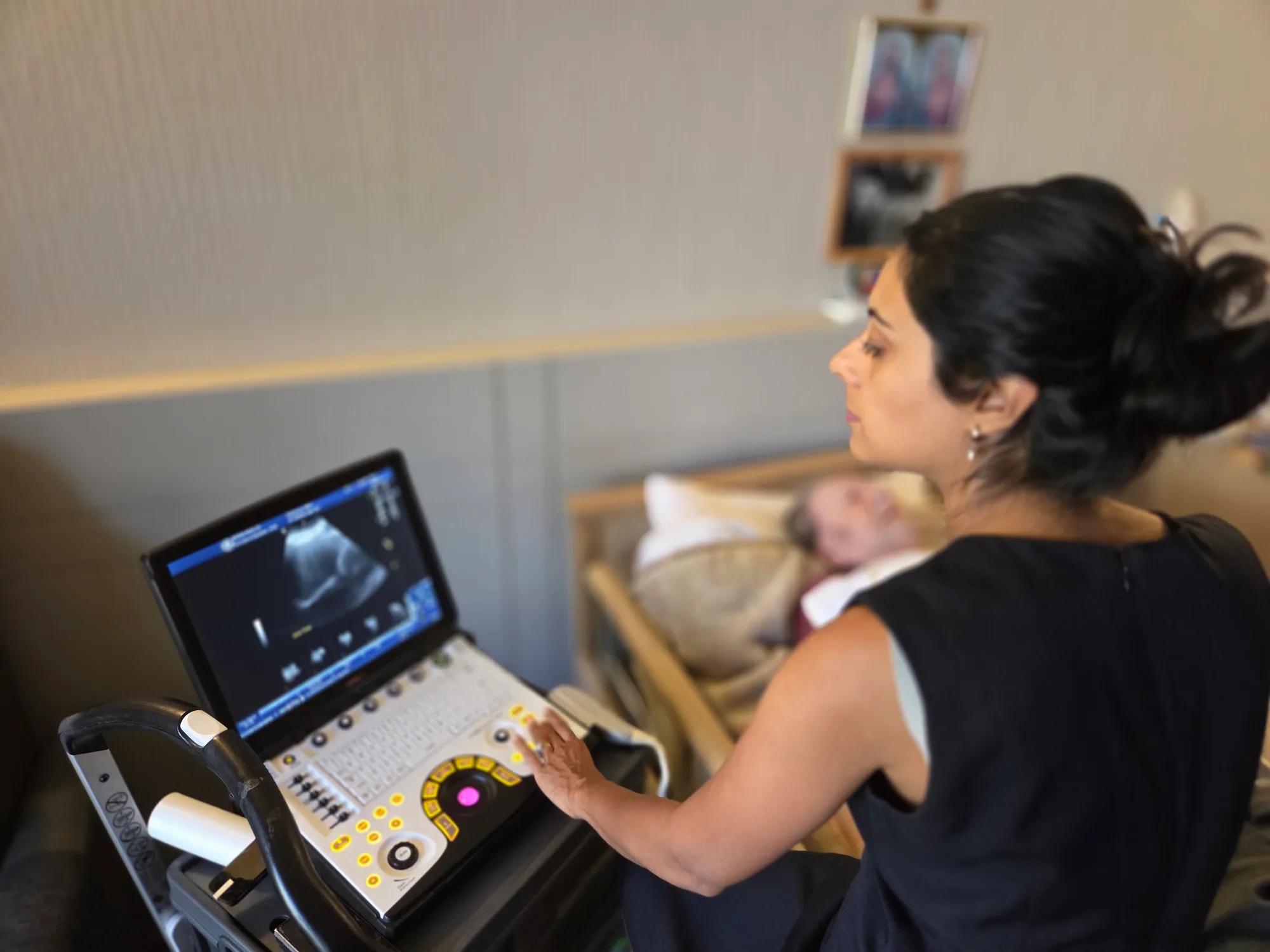
The GP was already there, waiting.
The ultrasound covered the resident's right arm, including elbow, shoulder, and the whole area where the bruising had appeared. But here's what makes mobile imaging different: we weren't just ticking boxes on a referral form.
When our technician saw the hematoma, they didn't wait for someone else to wonder about complications. They checked for DVT on the spot.
Clinical Decision-Making in Real-Time
This is what sets mobile imaging apart. The GP didn't have to re-refer. Didn't have to wait days wondering "should I have also asked about...?" The question was answered before it was even asked.
While the ultrasound was happening, the GP looked up and said:
"Has an X-ray been ordered for this?"
Our technician made a call. Yes, we had availability for a same-day X-ray.
The GP created the referral on the spot. Within two hours, our X-ray technician was on site.
The Timeline That Changed This Resident's Day
Let's break down what actually happened:
| Time | What happened |
|---|---|
| 11:00 AM | Nurse calls Modia Health |
| 11:05 AM | Booking confirmed, referral sent |
| 12:00 PM | Ultrasound technician arrives at the facility |
| 12:30 PM | Ultrasound complete, images uploaded immediately |
| 1:30 PM | Radiologist begins reporting, dictation complete within the hour |
| 2:00 PM | X-ray technician arrives on site |
| 2:30 PM | X-ray complete, images uploaded |
| 4:00 PM | Full report finished and dispatched to GP and facility |
3 hours – from initial phone call to complete diagnostic report in the hands of the treating GP.
The Diagnosis
Because we'd flagged this one as urgent, our radiologist prioritised the report. And what he found mattered:
- Fracture confirmed in the elbow
- No DVT (ruling out a potentially dangerous complication)
- Hematoma present (explaining the bruising)
- Complex collection in the shoulder (guiding further management)
The resident couldn't move his arm. He was in significant pain. He needed answers, not tomorrow, not after a day in the emergency department, but now.
And now he had them.
The GP could make immediate clinical decisions. Treatment could start. Pain management could be targeted. The care plan could be built on actual diagnostic evidence, not guesswork.
What the Alternative Looked Like
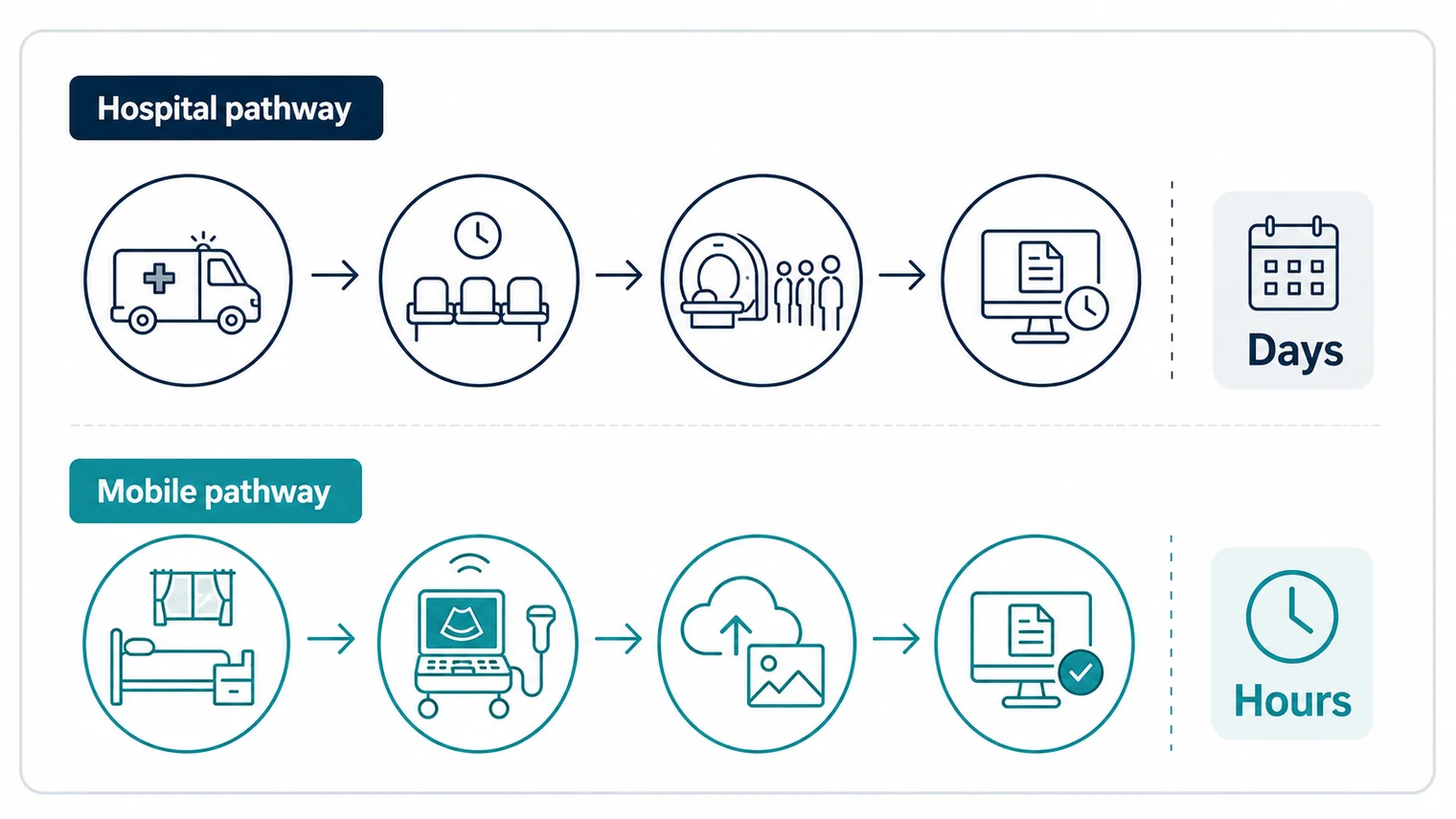
Let's be honest about what would have happened without mobile imaging.
This resident would have waited hours for an ambulance, and then many more hours in ED triage. Picture an elderly man in pain, sitting in an unfamiliar environment, surrounded by chaos and noise.
After that, he'd have queued again to be booked for X-ray, then ultrasound, and finally for the results to come back.
The Hospital Alternative
We're talking a 24-hour ordeal. Minimum.
And given what they found? They probably would have kept him even longer.
Instead, he was assessed in the comfort of his own room. His friend was there with him, holding his hand, making sure he was okay, watching as everything came to him instead of forcing him into a system designed for a different kind of patient.
She was so thankful, and so surprised.
"Everything is coming to him," she said. "And I can be here to look after him."
That's what dignity looks like in aged care.
What Made This Possible
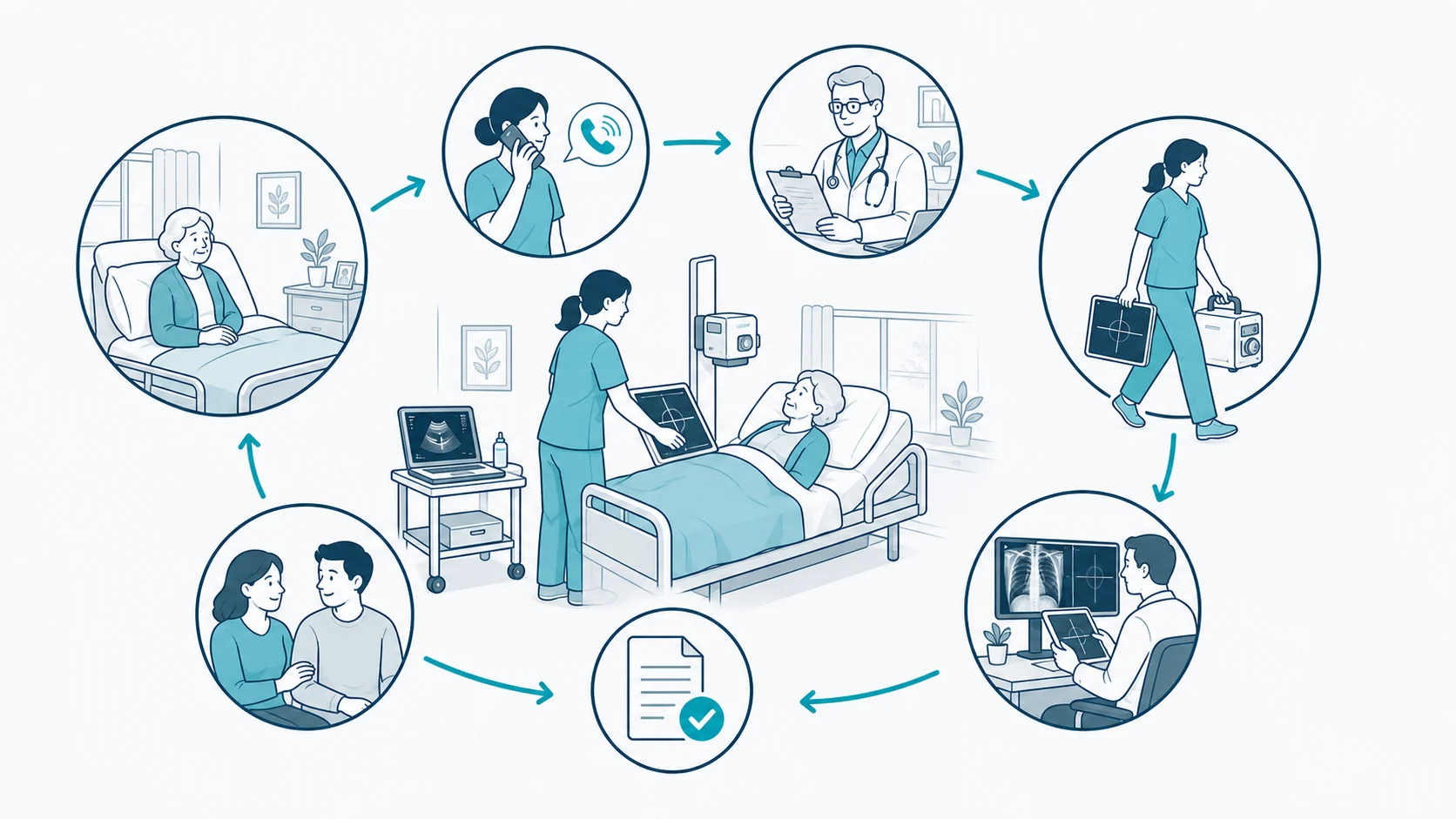
This wasn't magic. It was coordination. It was a team that understood the urgency and acted accordingly:
| Role | Contribution |
|---|---|
| The Nurse | Who knew mobile imaging was an option and made the call instead of defaulting to hospital transfer. |
| The GP | Who stayed present, asked the right questions, and created referrals on the spot when additional imaging was needed. |
| CAREPACT | Ensuring cost wasn't a barrier to urgent care. |
| The Facility | Taking resident care into their own hands and advocating for quick, high-quality service. |
| Our Technicians | Flexible, available, and equipped to provide same-day service when it mattered most. |
| Our Radiologist | Prioritising urgent reports and delivering answers within hours, not days. |
This is what multidisciplinary care looks like when everyone is pulling in the same direction.
For Every Aged Care Professional Reading This
You Have More Power Than You Think
When you know mobile imaging is available, and you make that call instead of starting the ambulance booking process, you're not just saving your facility time. You're not just reducing your workload either.
- You're keeping a resident in pain from spending 24 hours in a hospital system that wasn't designed for them.
- You're letting their friend or family member stay by their side through the whole process.
- You're getting answers in hours instead of days.
This is what's possible when healthcare comes to your residents.
Ready to Make This Your Reality?
At Modia Health, we work with aged care facilities across Greater Brisbane and surrounding regions to provide exactly this kind of responsive, resident-centred care.
- Same-day service for urgent cases
- Online booking that takes minutes
- CAREPACT integration for eligible residents
- Results within hours when it matters most
Related Articles
About This Article
This article is based on a real case from an RACF in the Greater Brisbane region in late 2025. Details have been shared with permission, and some identifying information has been changed to protect patient privacy.
Modia Health works in partnership with Queensland Health's CAREPACT program, providing mobile diagnostic imaging that keeps potentially avoidable ED presentations out of hospital and enables safer, faster, more dignified care for aged care residents across Greater Brisbane and surrounding regions.
*This article is intended for informational and educational purposes for aged care professionals. Mobile imaging should always be used in consultation with medical professionals and appropriate clinical assessment.*


