
Honestly, the healthcare system isn't built for everyone. If you've been hurt, traumatised, or completely overwhelmed by hospitals and clinics, you're not alone. You're also not being dramatic.
Quick Reality Check: Medical trauma is real. Hospital anxiety affects millions of Australians. Sometimes the very places meant to heal us can feel like the last place we want to be. But here's what our team has learned: healthcare can come to you instead.
Skip the hospital stress. Book your mobile ultrasound today, and we'll come to you.
The People Who Fall Through the Cracks
We see you. The people who fall through the cracks because a standard clinic visit feels impossible. The ones whose PTSD gets triggered by fluorescent lights and that particular hospital smell. The people whose care gets delayed because the system wasn't designed with trauma in mind.
Here's what our team has learned after years of bringing medical imaging directly to people's homes and aged care facilities.
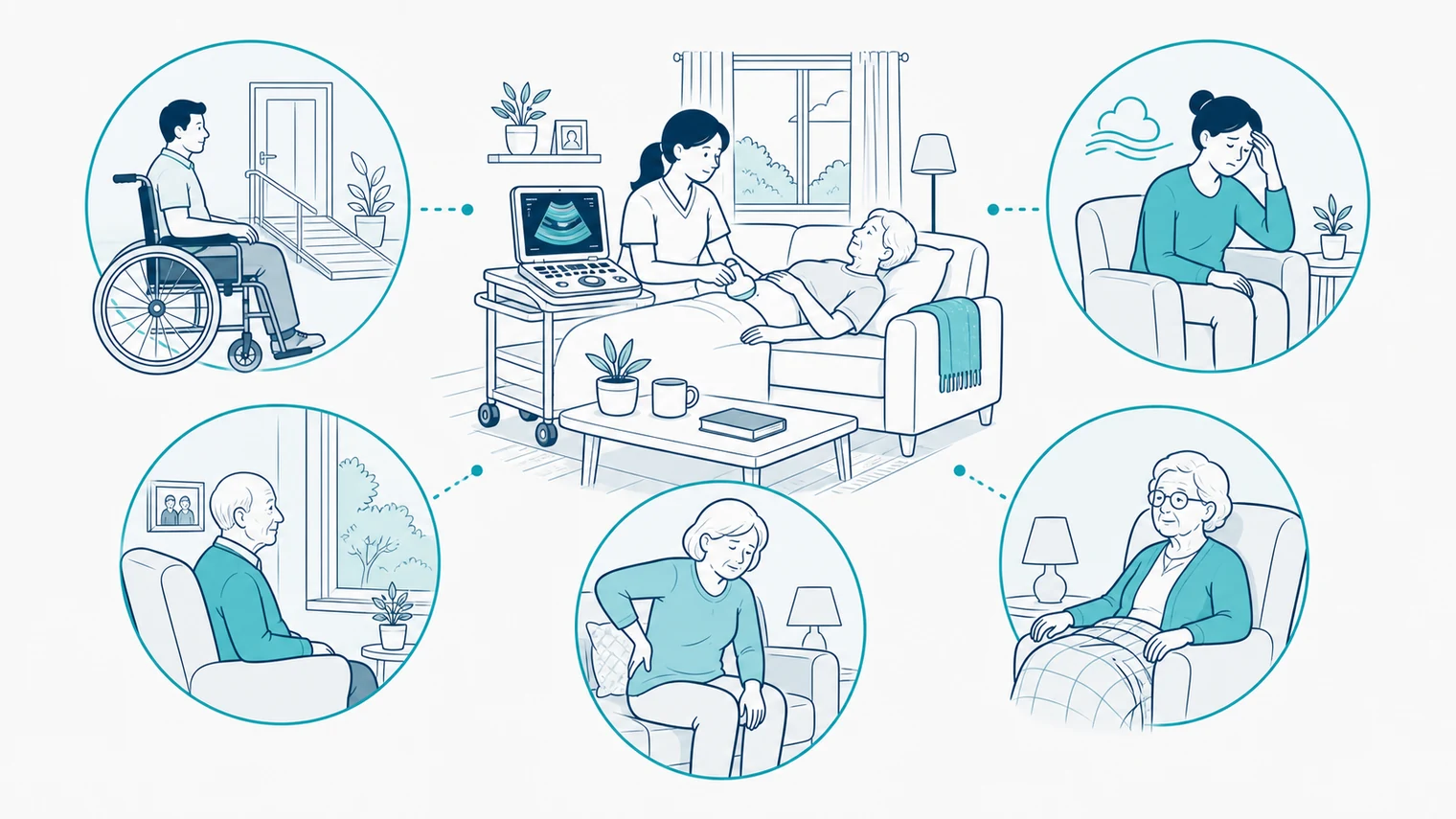
One client was a young man whose world changed after a car accident. The hospital didn't end up being the safe space it should have been. Traditional clinics felt impossible when severe social anxiety from PTSD took hold. Walking into a busy radiology clinic, with all those people and that clinical atmosphere, his heart rate would spike before he even reached the parking garage.
Another client was a paraplegic gentleman for whom hospital visits meant transfers, wheelchair accessibility issues, and the exhaustion that comes with working through a system not built for his needs. In his own home, everything changed. Familiar surroundings, his own equipment, and none of the stressful transfers.
Our team has even helped someone with severe photophobia, where bright light causes pain. Fluorescent hospital lighting was never going to work for him.
Trauma-informed care isn't just a buzzword.
Understanding Medical Trauma
Maybe you know this feeling. Your heart starts racing when you see that hospital sign. Your palms get sweaty in waiting rooms. The smell of antiseptic makes your stomach turn.
Medical trauma can come from:
- Previous traumatic medical experiences
- Emergency situations that left lasting impact
- Feeling powerless or unheard in clinical settings
- Sensory overload from hospital environments
- Repeated procedures or chronic conditions
Funny thing about trauma. It doesn't care about your appointment time. When your nervous system is already on high alert, walking into a hospital can feel like walking back into the scene of an accident.
Here's another way to put it. Traditional healthcare often operates like a production line. Get in, get scanned, get out. But when you're dealing with anxiety or trauma, you need something different. You need time. You need control. You need to feel safe.
A Different Kind of Healthcare
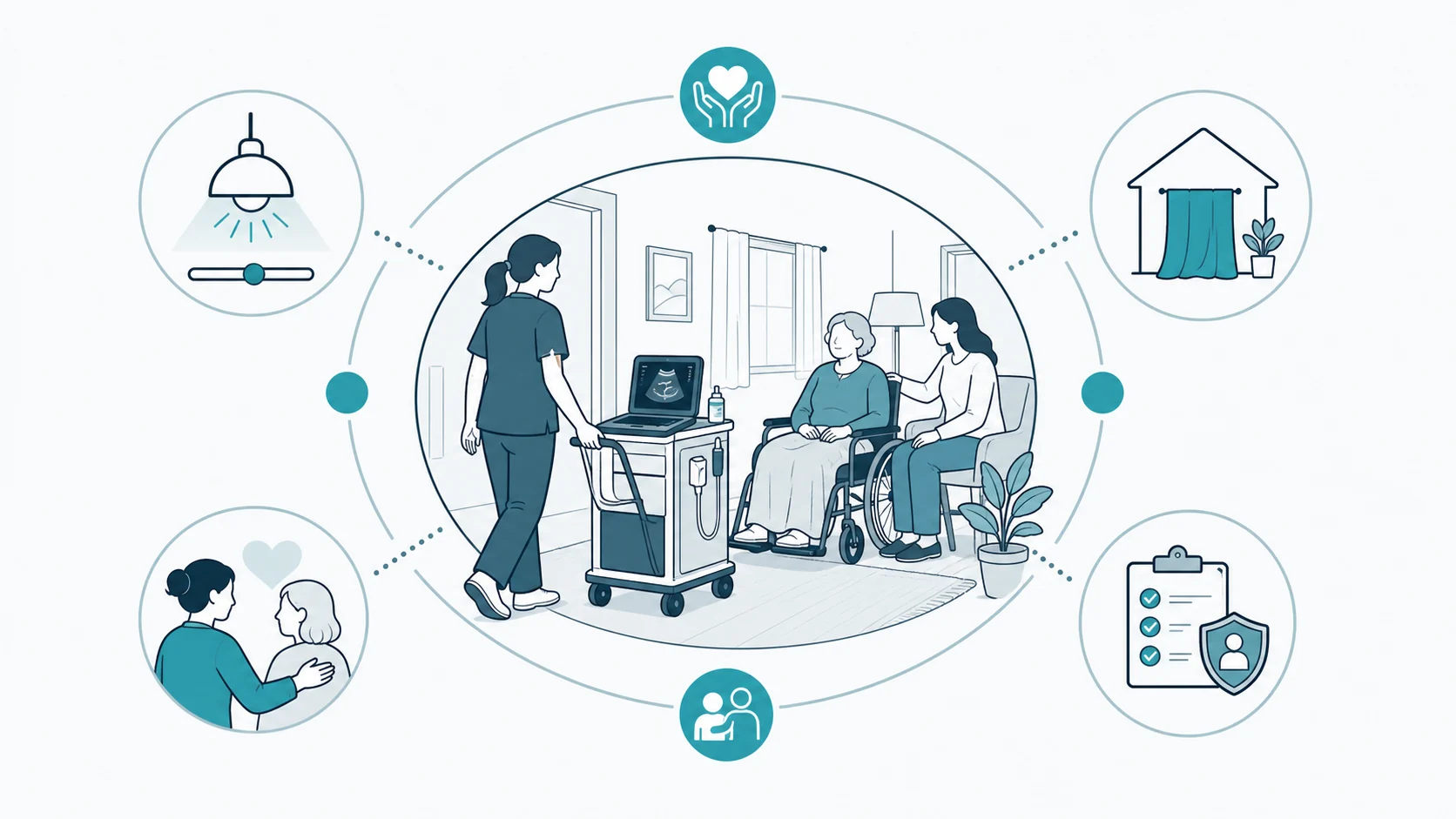
What if getting an ultrasound could happen in your living room? On your couch, with your support person right there. None of the fluorescent lights, hospital smells, or rushing around.
That's exactly what our team does at Modia Health. We bring the technology to you, and more importantly, we bring understanding.
How Mobile Ultrasound Changes Everything
When we come to you, here's what changes:
- You're in control - Your space, your rules, your comfort level
- No sensory overload - Familiar sounds and lighting you choose
- Support systems intact - Family, carers, pets, whoever helps you feel safe
- Time to breathe - Without rushing, pressure, or that production line feeling
- Dignity preserved - Privacy in your own space
The difference this makes is clear to see. The person who hadn't had imaging done in three years because hospitals felt impossible? They got their scan. The elderly gentleman whose dementia made hospital visits traumatic? Calm and comfortable in his familiar aged care room.
Ready to try a different approach?Book your home visit or contact us.
Real Stories, Real People
Here are a few of the people our team has had the privilege to help.
The Car Accident Survivor
This young man's life changed in an instant. Quadriplegic after a devastating accident, he developed severe hospital-related trauma. The clinical environment, the loss of control, the memories. All of it became too much.
When our team came to his home, something shifted. He could stay in his adapted space. His support dog could be there. The team took their time, explained everything, and let him set the pace. The scan that had been delayed for months? Done in 30 minutes, with dignity intact.
The Light-Sensitive Patient
Photophobia is sensitivity to light that can make bright lighting painful. Imagine needing medical care when standard lighting causes you physical pain. Hospital fluorescents were absolutely not happening.
Our team dimmed the lights in his home, used the portable equipment with minimal lighting, and got the images his doctor needed. Sometimes healthcare really is about adapting to the person, rather than forcing the person to adapt to the system.
The PTSD Warrior
Social anxiety from PTSD made public spaces feel dangerous. Waiting rooms full of strangers, clinical smells, and the unpredictability of hospital environments were all triggering.
In his own home, with his trusted support person present, our team completed a thorough abdominal ultrasound. There were no crowds, unexpected noises, or loss of control. Just healthcare that worked around his needs, rather than against them.
The Science Behind Trauma-Informed Care
This isn't just about being nice (though we are). There's actual science behind why trauma-informed care works better.
Your Brain on Medical Trauma
When you've experienced medical trauma, your brain's alarm system (the amygdala) becomes hypervigilant. Hospital environments, with their bright lights, loud noises, and clinical smells, can trigger this alarm system before you even see a healthcare provider.
The result? Your body floods with stress hormones. Your heart rate spikes. Your breathing becomes shallow. And suddenly, getting the care you need feels impossible.
Why Home-Based Care Works
Familiar environments help regulate your nervous system. When you're in your own space:
- Cortisol levels stay lower - Less stress hormone means better cooperation with procedures
- You maintain control - Control reduces anxiety and trauma responses
- Support systems are intact - Familiar faces help regulate emotional responses
- No time pressure - Rushing triggers fight-or-flight responses
Evidence-based care. Learn more about our trauma-informed ultrasound services.
What Makes Mobile Ultrasound Different?
Here's the thing about mobile healthcare. It's not just about convenience. It's about completely rethinking how care can work when you put the person first.
Our Trauma-Informed Approach
Before We Arrive:
- Detailed consultation - We discuss your specific needs, triggers, and preferences
- Flexible scheduling - When you feel most comfortable, not when it's convenient for us
- Clear expectations - No surprises or sudden changes
During Your Appointment:
- Your support team - Bring whoever helps you feel safe
- Your environment - Your music, your lighting, your comfort items
- Your pace - Need a break? No problem. Feeling overwhelmed? We pause.
- Constant communication - We explain everything, ask permission, and check in regularly
After Your Scan:
- Immediate feedback - We share what we can see right away
- Direct communication - Results go straight to your GP, with no waiting
- Follow-up support - Questions? Concerns? We're here.
Beyond Trauma: Who Else Benefits?
While we're passionate about trauma-informed care, mobile ultrasound helps plenty of other people too.
Aged Care Residents
Moving elderly residents to hospitals for routine scans can be disorienting and distressing. We bring the technology to them, maintaining their routine and dignity.
New Parents
Juggling newborns and medical appointments? We come to you. Your baby stays comfortable, and you stay sane.
Mobility Challenges
Whether temporary or permanent, mobility issues shouldn't delay your healthcare. We adapt to your needs.
Healthcare for everyone. Check our service areas across Greater Brisbane and surrounding regions.
Common Questions About Mobile Ultrasound
"Is the image quality the same?"
Absolutely. We use the same high-end ultrasound equipment you'd find in major hospitals. The only difference is the location, and the much better experience.
"Does Medicare cover it?"
Many mobile ultrasound scans are Medicare-eligible when referral requirements are met. For eligible imaging, you pay only the quoted gap and Modia Health handles the Medicare benefit for you.
"How long does it take?"
Most scans take 15-45 minutes, but we never rush. If you need more time to feel comfortable, we take more time.
"What if your home isn't suitable?"
We've done scans in tiny apartments, aged care rooms, and even outdoor spaces when needed. Our equipment is portable and adaptable.
"Who performs the scan?"
All our sonographers are fully qualified, registered healthcare professionals with extensive experience in trauma-informed care.
More questions?Contact us or call us directly.
Taking the First Step
We get it. Even thinking about medical appointments can be overwhelming when you've been hurt by the healthcare system before. Here's what our team wants you to know.
Ready to Try Something Different?
Starting is often the hardest part. Here's how we make it easier:
- Call for a chat - No commitment, just a conversation about your needs
- We plan together - Your comfort, your timeline, your way
- We come to you - Familiar space, your support team, your pace
- Get the care you need - Without the trauma, without the stress
Skip the Hospital Stress
Mobile ultrasound that comes to you. Trauma-informed care that puts you first.
A Personal Note
If you've made it this far, thank you. Thank you for considering that healthcare can be different. Thank you for not giving up on getting the care you need.
We've seen too many people delay important medical care because the traditional system felt impossible. We've seen the relief on faces when people realise they don't have to choose between their mental health and their physical health.
If getting to a clinic is hard for you, ask your GP whether a mobile scan would work, or call us on 1300 600 039 to check what's possible.


